

The Nocturnal Economy of Sniffies
Field Notes From Mexico City
CHRONICLES | MARCH 13th, 2026
7 MIN READ | WORDS by Jona Montoya
I was leaving TOM’S the other night—after satisfying what I can only classify as a very specific hunger—when I experienced a familiar feeling: the vague sense that the night was… unfinished.
You drink too much, you want water. You eat a three-course meal, and suddenly you’re hungry again—just for something else.
That is typically when I open Sniffies.
Not during events. After.
I wait for the city to loosen. Better after eleven—midnight, if possible—when walking a few hundred metres feels less like effort and more like drift.
You open the map, and the city flickers to life.
Someone is 300 metres away.
Someone else is in your building.
Someone is already moving.
It feels almost embarrassingly efficient—unlike Grindr.
Sniffies doesn’t ask who you are.
It asks what you want.
And more importantly—how soon.
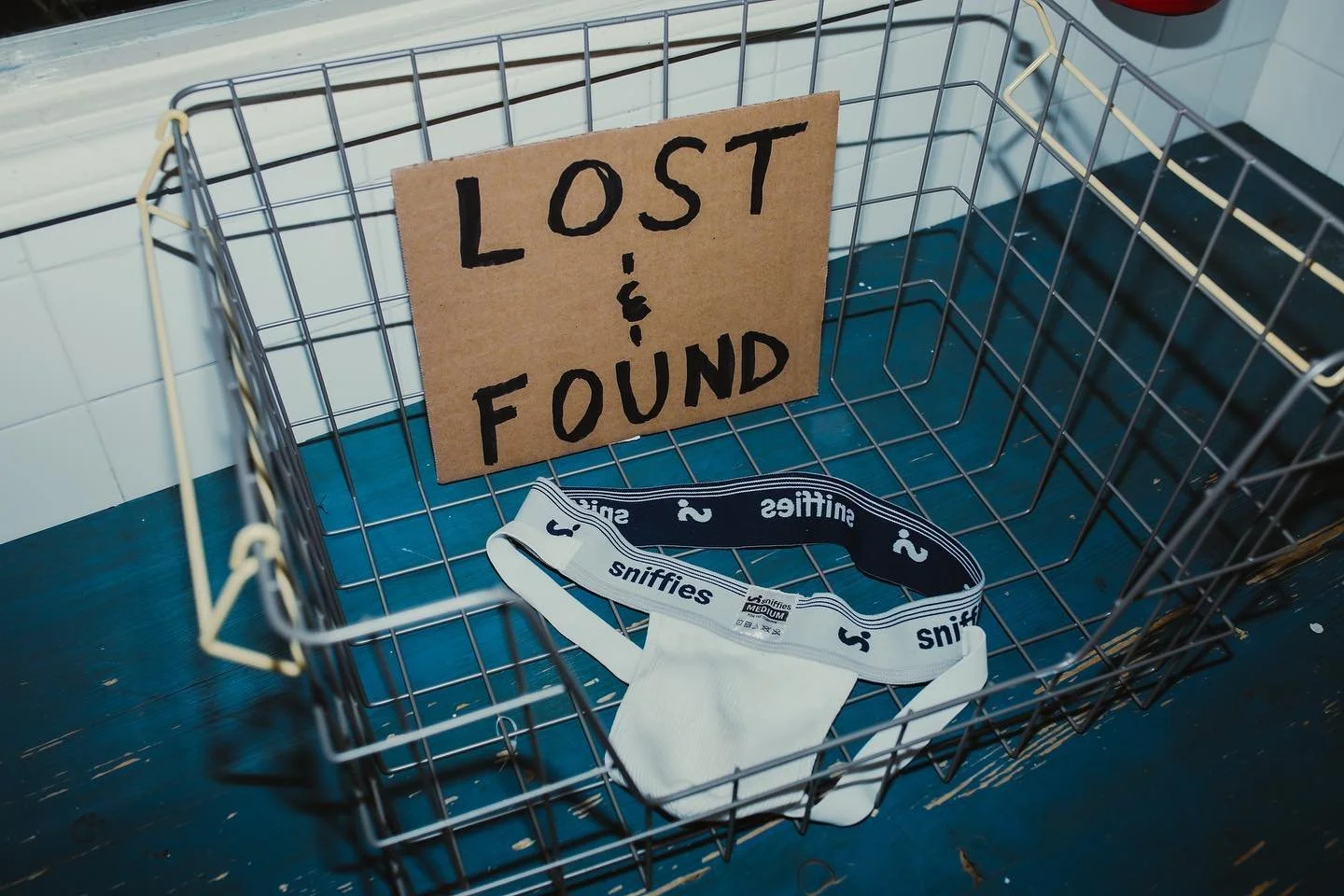
Photo: Sniffies, Facebook
II
A decade ago, an active sex life in Mexico City required coordination.
You planned it. Negotiated it. Dressed for it. There were codes, slow recognitions. Desire moved like traffic on Insurgentes Avenue—dense, frustrating, occasionally worth it.
Now it runs on acceleration.
A message.
A location.
A decision.
Ten minutes later, you’re standing on a street you’ve walked a hundred times before, but it feels slightly tilted.
You don’t open Sniffies because you’re looking for love.
You open it because you want something to happen.
I’ll cross entire neighbourhoods for someone whose name I’ll never ask. Shoes off. No names. No eye contact for longer than necessary.
I’ll leave before my eyes adjust to the light, before my body has fully caught up with what has happened.
At some point, I’ll catch my reflection in a dark window—half-dressed—and won’t recognise myself immediately. But I won’t care.
Personality has become irrelevant.
We deal strictly in appetite.
That honesty is disarming.
I have no patience for narrative—and I’m a writer.
III
Of course, there is a darker edge.
Anonymity is a solvent. It dissolves inhibition—and, occasionally, consequence.
Maybe you’ve been there—watching conversations disappear mid-sentence, as if the person on the other end simply ceased to exist.
Standing outside buildings, refreshing a chat that never updates.
Maybe you’ve been blocked while you were already on their street.
Maybe it was me—the one who blocked you.
No closure. Just absence.
I’ve also stood outside buildings where the entrance light was broken, rereading the last message, trying to extract certainty from tone.
Halfway up, you start asking yourself questions you should have asked earlier.
There is a casualness to disappearance that would feel pathological anywhere else, but here feels inevitable.
You learn not to take it personally.
Or at least, you tell yourself you don’t.
At times, it feels like watching animals at a watering hole. No one is pretending to be anything other than what they are in that moment: hungry, thirsty, cautious, reckless.
It is, effectively, a nocturnal economy.
Even during the day.
IV
I don’t remember every encounter. They blur.
But I remember the bad nights.
And especially the ones where—after a few messages and a short walk—I’m standing outside a building, looking up, thinking: something about this feels off.
A dark staircase.
A message that shifts tone once you’re close.
Nothing I can immediately explain. Just a hunch.
Once, I made it to the door.
Stopped.
Listened.
Nothing.
Not silence—just the absence of anything I could place.
A chill down my spine.
I stood there long enough for it to become a decision.
And then I left.
No message. No explanation. Just my footsteps going back down the stairs, louder than they should have been.
V
I’ve been cruising since I was 15. I’ve learned to pay attention to that hunch.
Because the risk is real.
You’re moving through a system built on partial information. Proximity without context. Intention without verification.
So you compensate.
You read patterns.
You listen for what isn’t being said.
You notice when something doesn’t hold.
It’s a kind of intelligence you don’t talk about, but rely on constantly.
Street smarts, internalised.
Every time I trust that instinct, I surprise myself.
VI
Sniffies, for all its bluntness, offers a simple truth:
You can dress it up however you like. Build apps around it. Analyse it. Pretend it’s new.
It isn’t.
Cities have always had their shadows.
And in Mexico City, where men still get beaten for wanting the wrong thing, there is always a moment when you have to decide how much of yourself you’re willing to risk.
I’ve never been particularly good at sitting still inside my own life.
I move. I test. I push.
Sometimes just to confirm that I can still feel something.
That I’m still responsive. Still alert. Still capable of wanting something enough to move towards it without overthinking it to death.
There’s a fine line between feeling alive and putting yourself at risk.
I know where it is.
I just don’t always step back from it. ■




Why México keeps the people who said they wouldn’t stay
REPORTED ESSAY | MARCH 25th, 2026
7 MIN READ | WORDS by Jona Montoya
It is rarely presented as a decision.
They arrive with luggage that suggests impermanence.
Passing through.
Here for a season.
For a person.
For the sake of a language they have not yet quite managed to learn.
All of it true in the way good cinema is true.
All incomplete.
Because once you’ve met enough of them—on the apps, in saunas, in those half-lit taco stands at 3am where someone is always cutting a lime—the pattern settles.
Different stories.
Same outcome.
No gay man walks into México announcing:
I’ve come here because my life will function better.
And yet—
in most cases, they stay, because here, the cost of being yourself is lower.

Rock Hudson (left) on holiday in Puerto Vallarta with former partner Lee Garlington. Photograph by Courtesy Martin Flaherty & The Rock Hudson Estate Collection/HBO
II
I began to notice this not in any formal way, but domestically—within the confines of my own building, across from Chapultepec Park, where at one point it seemed I was the only Mexican resident.
It did not feel dramatic.
It felt, rather, like a small administrative error.
The men were polite. They greeted me in English, occasionally in Spanish, always with the slight hesitation of someone unsure which version of themselves was required.
Each had come for a reason that made sense.
Taken together, their presence suggested something else.
Many had left cities where life had become difficult to sustain.
New York. London. Berlin. Emerald Cities…
Places where endurance is rewarded—but only up to a point, after which it begins to feel like punishment.
They spoke about rent, about dating, about time and space—physical, emotional, psychological—as if these were finite resources. As if something was always running out.
In those places, you learn to compress yourself.
A smaller apartment.
A more efficient personality.
Fewer risks.
Fewer mistakes.
A quieter version of who you are.
III
And then they arrive here.
At first, nothing appears to change.
The streets are still crowded.
The traffic still behaves like weather.
México remains itself.
And yet—
something loosens.
The apartment is larger. Or perhaps it only feels that way. Meals extend a little longer than expected. Evenings do not end when they are supposed to. Time, which once felt rationed, begins to move differently.
The stakes—whatever they were—become harder to locate.
It is not that life here is easier. You are not more talented here. You are simply less constrained. And that difference is everything.
This is especially true in the gay world, where life has always been structured around access.
Who you meet.
Where you go.
How quickly something can happen.
How easily it can repeat.
Open an app after midnight and the city stops being abstract. It becomes a field of options. Whatever you want is not far—and not particularly complicated. Friction is lower. And when friction drops, behaviour expands.
You stay longer at the table.
You order another drink without doing the math.
You flirt without the low-grade panic of what is this costing me?
In México, pleasure is not a splurge.
It is simply available.
IV
And then comes the shift.
The one they don’t announce.
The Cowardly Lion who couldn’t finish anything starts producing.
The Scarecrow who felt invisible becomes, suddenly, very seen.
The Tin Man who thought he had aged out of certain rooms realises the room has changed scale.
They will tell you México changed them.
It is possible that they are correct. It is also possible that what they are experiencing is not transformation, but the removal of constraints.
In the absence of resistance, people tend to behave differently.
There are, of course, adjustments.
Spanish is acquired unevenly.
Customs are observed selectively.
Certain inconveniences are noted with surprising authority.
I have heard complaints about “how things work here” from individuals who have not yet spent a full summer in the country.
These observations are rarely unkind.
They are simply revealing.
A slow recalibration of who gets to feel at home—and how quickly.
V
This is not a form of intrusion. No one is storming the gates.
These men are not villains. They are doing what people have always done—moving towards better conditions, towards easier lives, towards places where they can stretch out.
They stay. They build routines. They learn enough Español to flirt, argue, order, apologise. They find their coffee, their gym, their version of the night. They tip well. They talk about how much they love the city—and mean it.
And yet—
taken together, their presence produces changes that are difficult to ignore.
Neighbourhoods adapt. Prices adjust. Language shifts. In certain parts of the Mexico City, it is now possible to conduct an entire day in English without particular difficulty.
This is presented as convenience.
It is also, perhaps, something else.
VI
What interests me is not whether this is desirable or regrettable. Such questions tend to produce predictable answers. What is more difficult to examine is the mechanism itself.
Why here.
Why now.
And why the pattern repeats with such consistency.
The explanations offered—love, freedom, reinvention—are not incorrect.
They are simply insufficient.
What seems more likely is that México offers a particular arrangement of conditions under which certain lives become easier to sustain.
Less expensive.
Less rigid.
Less demanding of constant optimisation.
For those arriving with the appropriate resources—heart, brains, courage, money—this arrangement proves difficult to abandon.
After some time, the narrative changes.
The initial reason for arriving becomes less relevant.
In its place emerges a quieter justification:
Life, here, is better.
Not in a grand or transformative sense, but in ways that accumulate. More space. More time. Fewer penalties.
Scale that decision.
Multiply it.
What begins as personal relief becomes structural pressure. Rents shift. Menus change. Entire micro-scenes tilt—subtly, then clearly—towards people who were not originally the centre of them. You feel it most in places that used to be messy.
There is an irony here.
Many of these men left cities that had become too rigid, too expensive, too optimised to the point of suffocation.
And here—without intending to—they begin to reproduce a version of that same system.
Softer at first.
Then gradually more defined.
Because comfort, once discovered, has a tendency to organise itself.
VII
And that is the loophole.
México is not being loved purely for what it is.
It is being chosen—again and again—because of what it allows.
The language, of course, remains romantic.
“I love Mexico.”
“This city saved me.”
“I’ve never felt more like myself.”
None of that is false. I’ve met these men. Slept with some of them. Shared buildings, steam rooms, mornings after.
This isn’t a story about gays loving México. It is about recognising a system when you are inside it. Understanding that what feels like freedom is often just favourable conditions. And asking:
What happens when enough people find the same advantage—and decide to stay?
Because that’s the part no one puts in the caption. The part that doesn’t fit between a taco selfie and a sunset.
The part you only start to see—once you’ve been here long enough to realise:
Loopholes, by definition, do not stay open forever.
They expand.
They attract attention.
They reshape the system around them.
And eventually they begin to close.
Until then, México, continues as it always has:
Full of people who will tell you they came for truth, beauty, freedom and love— and discover, slowly, that they stayed for something else. ■






From Our Partners

Join the ConversationMexico is changing. In recent years, a growing number of gay men—particularly from the United States—have begun arriving with more than a holiday in mind. Some relocate, others linger. Drawn by culture, cost, climate, or cruising fatigue elsewhere, they meet a city in motion, and the encounter leaves marks on both sides. Gays Love México! is a record of a city and a community adjusting to one another, in real time. Through interviews and reported conversation, we examine how gay men actually live, work, love and spent their time here. To join the conversation, subscribe to the newsletter. You’ll receive occasional invitations to share your stories or respond to our questionnaires on gay culture, love, sex—and life in Mexico.
Submit a StoryDo you have a story you’ve never quite known where to put? The date that went off the rails. The job that humiliated you in ways HR never could. A friendship that imploded. A power dynamic you only understood once you were already under the boot. Nothing sensational—just clear, first-person accounts of how adults collide. Send it in. We’ll publish it in our upcoming column, HELL IS OTHER PEOPLE. Please note: We’ll edit your story for clarity and tone. All submissions are published anonymously. Names, workplaces, cities, and identifying details must be altered or removed. If a story still risks identifying a private individual, we’ll edit further—or decline it. All selected pieces will appear on this site over the coming weeks.
PartnershipsThis site runs on a short list of ads we actually believe belong here—things that make sense for our readership and don’t get in the way of the story.
Brands and partners wishing to engage with our audience may request the current Advertising Menu at hola@gayslovemexico.com.